


Posted on 14 July, 2026
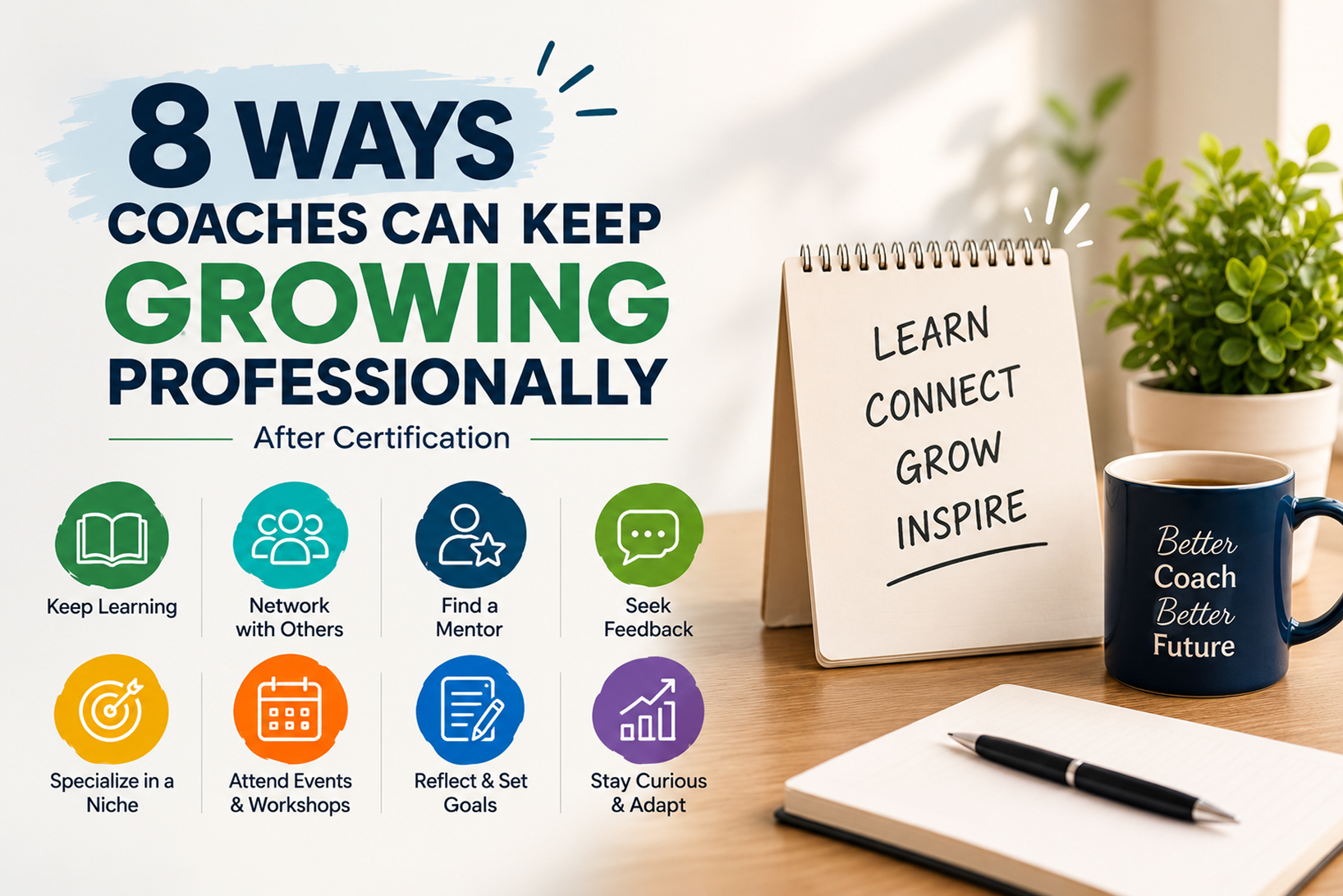
8 Ways Coaches Can Keep Growing Professionally After Certification
Share On:



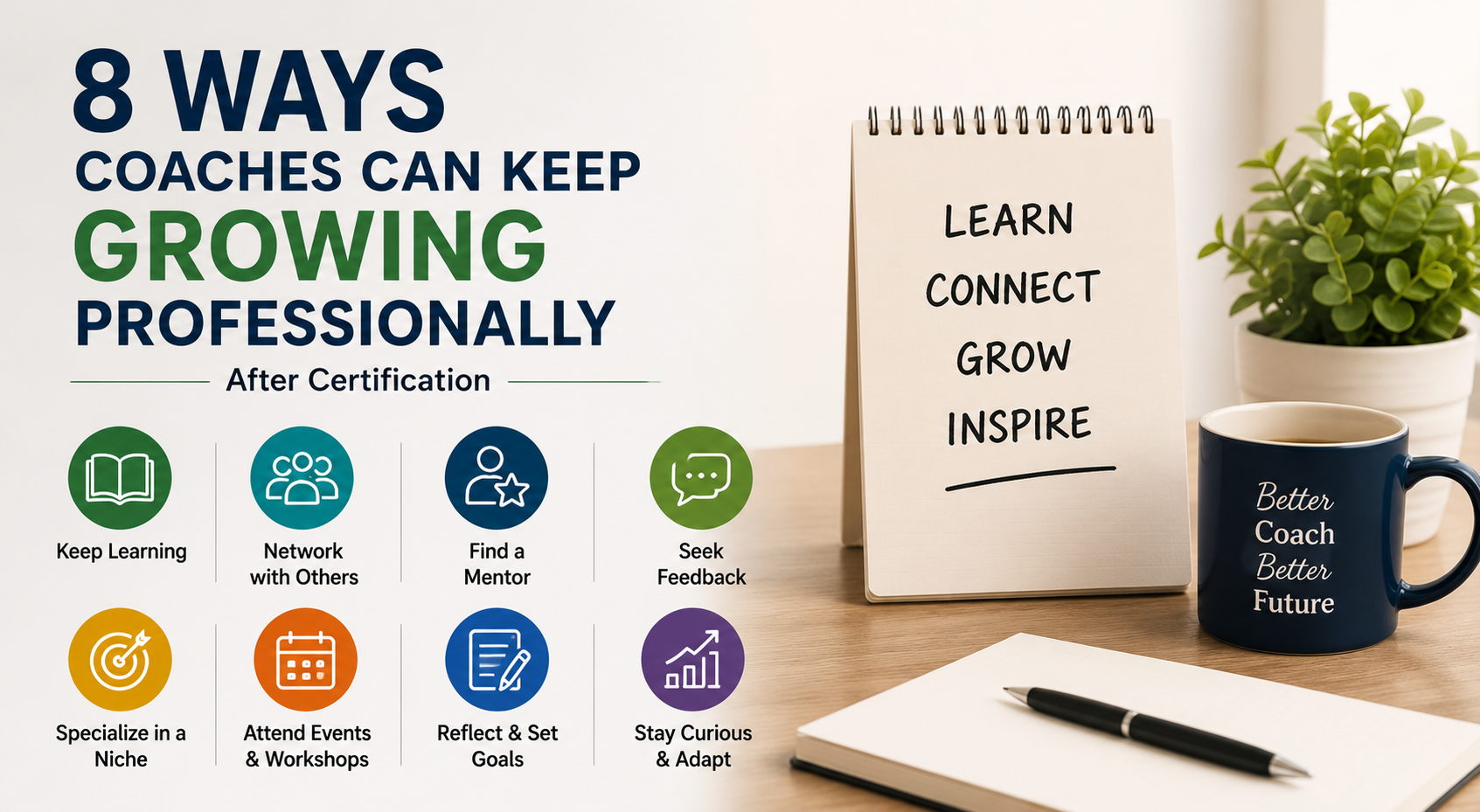
Achieving a coaching certification is a landmark moment in one's life, but it just marks the commencement of long-term learning and growth. The coaching landscape is constantly changing as new concepts, instruments, and service expectations arise. To be of assistance to people effectively, coaches must constantly learn Professional Development For Coaches and share their knowledge and abilities, regardless of their previous certification.
What is more, continuous development allows coaches to accumulate confidence, create value for their clients and remain competitive in the industry. Whatever you are in terms of your specialty (a life coach, an executive coach, a wellness coach, etc.), constant learning is something that is of paramount importance for your career advancement.
In this blog, we will talk about 8 Ways Coaches Can Keep Growing Professionally After Certification.
8 Ways for Coaches to Grow Professionally After Certification
1. Keep on Learning and Taking More Courses
Certification gives knowledge, but it does not mean that one should stop learning right away. Advanced coaching courses allow one to gain knowledge in a certain field and learn about new trends in coaching.
Here are some of the spheres one can specialize in:
- Executive coaching
- Team coaching
- Emotional intelligence
- Positive psychology
- Conflict resolution
- Business coaching
The more advanced your knowledge is, the more clients you can potentially help.
2. Find a Mentor or Coach
Even seasoned coaches can benefit from the coaching process when having a personal coach. A mentor can provide relevant tips, valuable feedback, and advice that is based on his/her experience.
Additionally, you get to experience your coaches position by being coached yourself.
This offers practical insights on how to have valuable coaching discussions and improve your personal approach to coaching. Regular mentoring sessions lead to a process of continuous development and help overcome issues in the course of your work.
3. Read Books and Industry Research
Successful coaches make learning a part of their routine. They read books, research papers and industry publications to keep on being informed and be introduced to various new ideas.
The following topics are worth studying:
- Leadership
- Communication
- Psychology
- Human behavior
- Emotional intelligence
- Organizational development
Even reading one professional book a month allows expanding one's knowledge and improve one's coaching conversations.
4. Become Part of Professional Coaching Communities
Sharing the experience with fellow coaches provides an opportunity to learn, collaborate and share experiences.
Professional communities usually provide access to the following:
- Webinars
- Workshops
- Peer coaching
- Networking events
- Industry news
Being part of a professional community helps keep discussing challenges, sharing your thoughts and learning from others with various backgrounds and experiences.
Building strong relationships with other professionals may lead to referrals and new joint projects.
5. Seek Genuine Client Feedback
Client feedback is one of the most effective methods for improving as a professional.
When the coach finishes a coaching engagement, the following questions may be put to the client:
- What helped you most during the coaching engagement?
- What can be improved?
- Did you feel that you were listened to?
- Did you manage to achieve your desired goals?
Feedback provides useful insights into your strengths and weaknesses as a coach. It also communicates to the clients that you care for their opinion and are eager to offer high-quality coaching services.
6. Employ Reflective Coaching
Reflection promotes learning through every coaching session.
At the end of every session, reflect on the following aspects:
- What was good?
- What questions had the most impact?
- When did the discussion become complicated?
- What would you do differently next time?
Keeping a coaching journal may help you trace continuous development, celebrate minor victories, and identify areas for improvement.
Regular reflections after each session may produce drastic changes in coaching effectiveness.
7. Cultivate Auxiliary Skills
Professional coaching is not only about asking good questions. Coaches also benefit from gaining auxiliary skills that contribute to better client engagement and the success of their practice.
Think about developing the following skills:
- Public speaking
- Facilitation
- Presentation skills
- Online marketing
- Personal branding
- Active listening
- Business development
These skills help coaches attract clients, run seminars, and build a sustainable coaching business.
8. Participate in Coaching Events and Conferences
Coaching conferences give coaches exposure to new trends, effective coaching approaches, and top experts.
Events typically include a wide variety of activities:
- Expert keynote speeches
- Hands-on workshops
- Live coaching demonstrations
- Networking opportunities
- New coaching gadgets and methods
Also, attending the conference allows coaches to know what is going on in the coaching world with coaching standards and proficiency.
Just take part in one or two important events every year to get valuable information and approaches that will improve your coaching practice.
The Importance of Continuous Improvement
Clients expect their coaches to help them overcome various difficulties. To keep this promise, coaches need to continue learning.
Ongoing professional development enables coaches:
- Improve coaching results
- Improve relations with clients
- Increase their self-trust and credibility
- Keep abreast of the latest changes
- Build new career opportunities and options
Do not stop learning after obtaining your coaching certificate. Every communication with your client, every book read, every training attended, and every event attended contributes to your becoming an effective coach.
Blockquote
Certification marks the beginning of your coaching journey—continuous learning, reflection, and growth are what transform a good coach into an exceptional one.
Summary
While certification can provide a solid foundation, the journey of becoming a good coach entails a lifelong commitment. Coaches who continue to learn will become more effective in helping their clients and have fruitful careers. Invest in yourself to become valuable to your clients.
Heart Acuity provides the best coaching to the leaders to become confident and to stay updated after doing certifications. Feel free to know more in detail about the courses and guidance.
Featured Blogs
Posted on: Jul 14, 2026
Read More




Contact Us
FREQUENTLY ASKED QUESTIONS
No, one needs continuous learning and experience in order to reach success.
Coaches should go for training and professional development throughout the year.
Feedback can contribute to understanding strengths of the coach, improving coaching techniques, and enhancing client experience.
Yes, networking can provide learning opportunities, cooperation and some referrals.
Reflective coaching means analyzing past coaching sessions in order to see successes and failures.
Yes, mentors help with valuable guidance, fresh viewpoints and support one in continuing one’s development.
There are many informational books regarding themes such as leadership, emotional intelligence, communication, and positive psychology that can be very useful.
Webinars, conferences, and professional events should help coaches remain up to date.
It is highly recommended that coaches work in specific areas such as executive coaching, leadership coaching, or wellness coaching to get more customers.
They help coach master up-to-date methods and provide better coaching outcomes.
Recent Blogs
Posted on: Jul 14, 2026
Read More
Posted on: Jul 14, 2026
Read More