


Posted on 26 May, 2026
How to Improve Self-Awareness for Better Leadership
Share On:



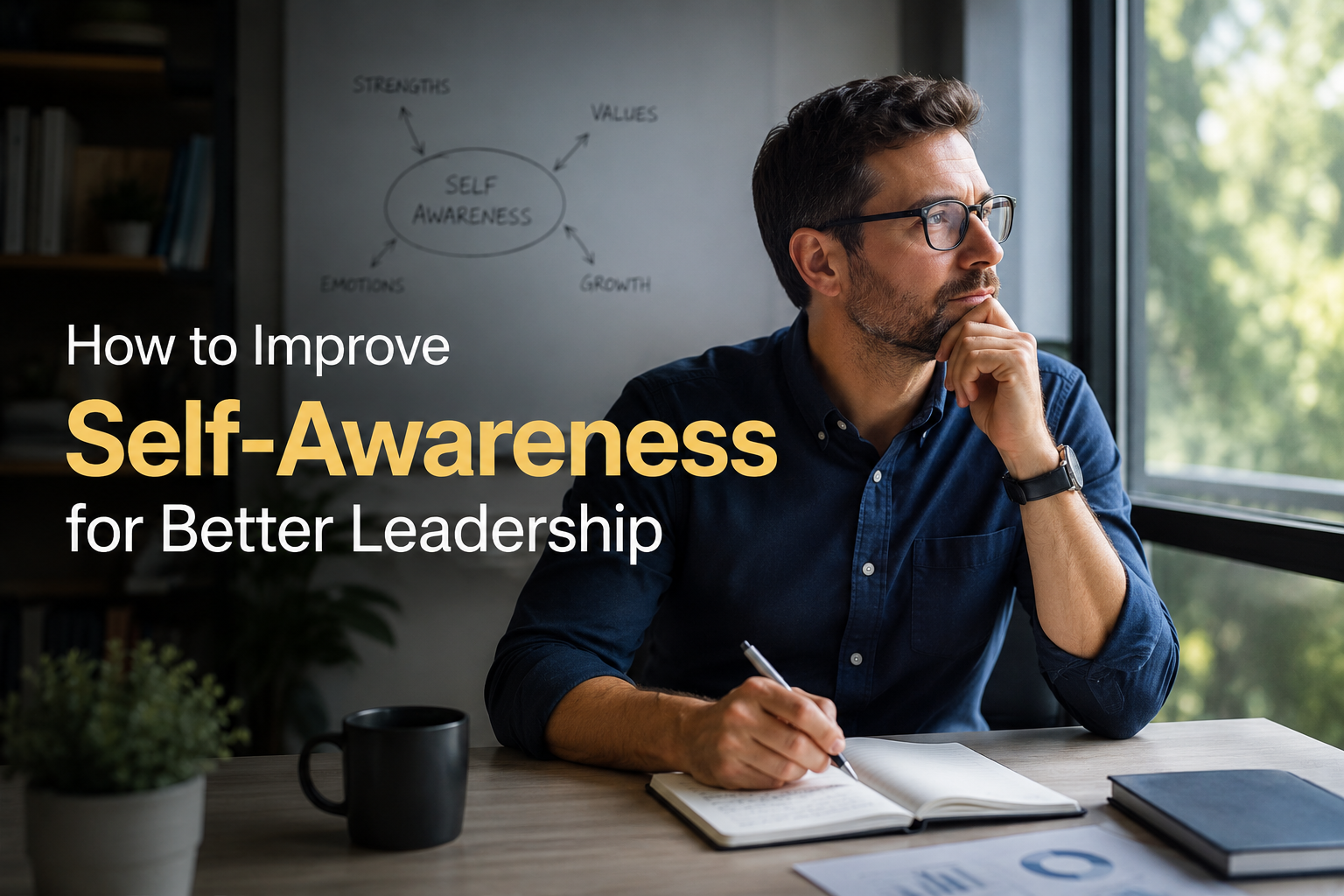
Are you guilty of reacting to a situation and thinking, "What did I just do!?" All leaders experience this at least once during their career. However, what few people understand is that great leaders are not born in the boardroom or through strategy sessions - they begin inside the individual leader. The utilisation of self-awareness while leading others is one of the most understated but powerful tools available to leaders. By having an understanding of your emotions, triggers, strengths, and blind spots, you are able to make better decisions, build better teams, and lead with a greater level of confidence and calmness.
Here in this blog, we give you proper information about how to Improve Self-Awareness for Better Leadership. So, stay tuned with this blog.
Why Leadership and Self Awareness Go Hand in Hand
Self-awareness and leadership are distinctly related because self-awareness is a part of being an effective leader, and therefore, they are inseparable. When someone (a leader) lacks self-awareness, they will not be able to respond rather than react, micromanage instead of being able to entrust their employees to do their jobs, and create tension rather than clarity when leading their people.
According to research conducted on the topic of self-aware leaders, they outperform their peers. They communicate effectively with their teams, manage stress effectively, and their teams have a significant amount of trust in them as a leader.
If you know yourself, what you value, and how you will react when presented with stressful situations, then you can lead your team in a way that reflects who you are and reflects positively on you as a leader. Overall, if you cannot understand yourself well enough to know how you will react, then you cannot be the best leader you can be when leading others.
Signs You May Need to Strengthen Your Self-Awareness
It can help to identify some areas of improvement before starting on them:
- Oftentimes, you feel misunderstood by your team members.
- You tend to react in an emotional way and then regret doing so after making your reaction.
- You find it difficult to accept feedback without becoming defensive about it yourself.
- You lack awareness of how you affect those around you.
You feel like there is too much weight attached to the decision you make or feel rushed to make that decision, even though you actually have enough information in order to make a sound decision. Letting any of these resonate with you is just a starting point for improvement, not necessarily something ‘wrong’ with you.
Practical Ways for Improving Self-Awareness as a Leader
1. Build a Daily Reflection Habit
Reflection time can increase your self-awareness, so make a practice of doing it every day for at least ten minutes. Set aside time to reflect on done at the end of the day by asking yourself simple questions like “What went well today?” “Where did I respond to my emotions instead of responding to a situation?” or “What emotions did I feel today?” The daily reflection practice will create consistent patterns of success.
2. Seek Honest Feedback Regularly
Leadership feedback is often filtered, edited, or intentionally withheld from many leaders. The secret to developing a culture of asking for and being open to offering real and honest feedback is providing a 360-degree assessment for their leadership and individual development. Or, consider using the Enneagram and VIA character strengths assessment tools as those would provide very good external input on how others perceive you as a leader.
3. Identify Your Emotional Triggers
Each leader has certain things or events that trigger emotional responses in them. Some examples of triggers can be: Your coworker who constantly cuts you off or interrupts you while you are trying to speak, a sudden change in plans made with little notice or a coworker/public figure questioning one of your ideas. While knowing these triggers does not remove them, it allows you to take a brief momentary pause (known as the gap) between the actual trigger and your reaction, the time when you will make your best decision as a leader.
4. Align Your Actions with Your Values
Self-awareness is more than just identifying your feelings; it includes your understanding of your core beliefs as well. As your core values drive your everyday choices, you begin to lead from who you truly are versus simply from a place of required effort.
5. Work with a Coach
Good leadership coaches provide you with an environment that allows you to take time away from the busyness of life, gain clarity through deep reflection, and reconsider the narratives you impose upon yourself. Coaching allows you to gain insight about yourself quicker than reading or training by yourself can.
The Ripple Effect of Self-Aware Leadership
When you make a commitment to becoming more self-aware, the positive effects extend far beyond yourself; they include providing a safer environment for your team (to express themselves), improving collaboration, building trust amongst those involved and giving people clarity on what to do and ultimately making faster decisions together with others around them. People who are near or work with someone who is self-aware will naturally perform at a higher level because they feel that they are acknowledged and listened to by their manager or leader and therefore they are engaged and motivated.
Leadership through Self-Awareness is a continually evolving process, not just a one-time activity, it requires an ongoing commitment towards personal development and will generate positive results throughout your organization.
Conclusion
Self-awareness for leadership are the foundations of everything great leaders create throughout their time as leaders. If you’re finally ready to dive deep, silence your inner chatter, and lead from a place of true clarity and confidence, then Heart Acuity will help guide you on that path. By employing proven coaching processes, emotional intelligence frameworks, and values-based leadership development, Heart Acuity helps executives, founders and any other type of leader like you gain the type of self-awareness that changes both how you lead and who you are as a leader.
The best investment you can possibly make is to learn about yourself.
Featured Categories
Featured Blogs




Contact Us
FREQUENTLY ASKED QUESTIONS
The reality is that many leaders experience this same situation; however, self-awareness goes beyond just understanding your personality; it encompasses how well you respond to stress, how your emotional state impacts your decision-making process, and how other people view you as a leader. There often exists a disconnect between your perception of yourself and your actual presentation of yourself. This disconnect serves as the basis for developing oneself.
Start petite. You don’t need to have everything sorted out on day one via a 10-step program. Start by doing at least 5 to 10 minutes of truly honest self-reflection at the conclusion of each day. The two questions that can help guide you are: What created my emotional response today? What was my reaction? Did my response show the type of leader I want to be? You will be surprised by how quickly your accumulation will add up with all of these simple, reflective activities combined together.
Self-awareness is an essential and powerful leadership skill, supported by several studies and many leaders demonstrate high levels of self-awareness, which allows them to make better decisions, develop stronger relationships with their teams and remain calm in stressful situations. In actuality, self-awareness is not a soft skill; rather, it is the basis for all other leadership skills.
That's basically what it's for. To recognize one's self means that the leader understands his/her flaws. By identifying blind spots, an individual can make a new decision. Leaders who continue to improve are not necessarily the ones who have complete knowledge of what they are doing; however, it is those who take the time to self-reflect without prejudice.
Recent Blogs
Posted on: Jul 14, 2026
Read More
Posted on: Jul 14, 2026
Read More